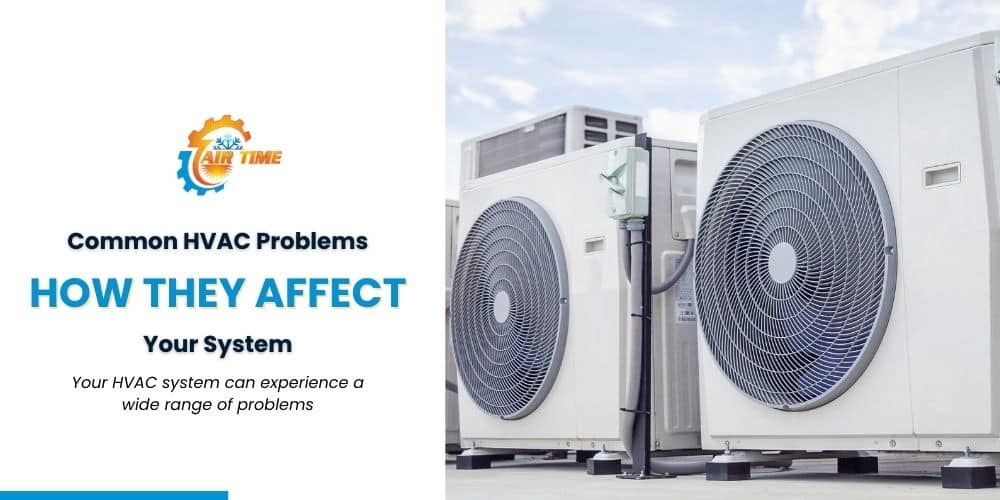
Your HVAC system plays a critical role in maintaining indoor comfort throughout the year. From heating in winter to cooling in summer, it operates continuously to regulate temperature, airflow, and air quality. However, like any mechanical system, HVAC units can develop issues over time.
Understanding common HVAC problems and their solutions helps homeowners prevent costly repairs, improve energy efficiency, and extend system lifespan. Regular maintenance and early detection are key to keeping your system running smoothly.
Ten Common HVAC Issues
Below are ten of the most common HVAC issues affecting air conditioners, furnaces, and duct systems, along with practical solutions for each.
1. Dirty Filters

Dirty air filters are one of the most common causes of HVAC performance problems. When filters become clogged with dust and debris, airflow is restricted. This forces the system to work harder, increasing energy consumption and causing unnecessary strain on internal components.
Solution:
Replace air filters every 1–3 months, depending on usage and indoor air quality conditions. Always choose the correct filter size and MERV rating recommended by the manufacturer. Regular filter replacement improves airflow, efficiency, and indoor air quality.
2. Dirty Ductwork

Over time, dust, debris, pet dander, and other particles can accumulate inside ductwork. This buildup reduces airflow and can negatively impact indoor air quality, especially for individuals with allergies or respiratory sensitivities.
Solution:
Schedule professional duct inspection and cleaning every few years. Sealing gaps in ductwork and removing debris helps restore proper airflow and improves system efficiency.
3. Problems with the Pilot Light or Ignition System

Modern furnaces rely on ignition systems to start the heating process. If the pilot light, flame sensor, or ignition control fails, the furnace may not heat properly or may shut down entirely.
Solution:
Check for visible issues such as a weak flame or error codes on the control panel. Because gas and electrical components are involved, ignition system repairs should always be handled by a qualified HVAC technician.
4. Malfunctioning Thermostat

A faulty thermostat can cause inconsistent temperatures, short cycling, or complete system shutdown. Sometimes the issue is as simple as incorrect settings or dead batteries.
Solution:
First, check thermostat settings and replace batteries if needed. If the problem persists, consider recalibration or upgrading to a programmable or smart thermostat for better temperature control and efficiency.
5. Tripped Breakers or Blown Fuses

If your HVAC system suddenly stops working, electrical issues such as tripped breakers or blown fuses may be the cause. This often happens when the system overheats or experiences excessive load.
Solution:
Inspect your electrical panel and reset the breaker if necessary. If the breaker continues to trip, contact an HVAC professional to inspect for underlying issues such as motor failure or restricted airflow.
6. Dirty Condenser or Evaporator Coils

Coils are responsible for heat transfer within your HVAC system. When condenser or evaporator coils become dirty, they lose efficiency, forcing the system to consume more energy.
Solution:
Turn off the power before gently cleaning the outdoor condenser coils using a soft brush or hose. For internal evaporator coils or heavily soiled components, schedule professional cleaning to avoid damage.
7. HVAC Leaking Water from the Unit

HVAC systems naturally produce condensation. If the drain line becomes clogged, water may back up and leak around the unit. Persistent leaks can damage floors, walls, and system components.
Solution:
Regularly inspect and clean the condensate drain line to prevent blockages. If leaking continues, a technician should inspect the drain pan, pump, and internal components to prevent structural damage.
8. Uneven Room Temperatures

If some rooms feel warmer or cooler than others, the issue may stem from airflow imbalance, blocked vents, or duct design problems. Poor insulation can also contribute to uneven temperatures.
Solution:
Ensure vents are open and unobstructed. Consider duct balancing or zoning systems for improved air distribution. A professional airflow assessment can identify sizing or layout issues.
9. Negative Air Pressure

Negative air pressure occurs when more air is being exhausted from the home than supplied. This causes unfiltered outdoor air to enter, affecting comfort and energy efficiency.
Solution:
Have a professional evaluate ventilation systems, duct leaks, and fan settings. Proper airflow balancing and sealing leaks can correct pressure imbalances.
10. Leaky Air Ducts

Leaky ducts allow conditioned air to escape before reaching living spaces. This reduces efficiency and increases energy bills while placing additional strain on the HVAC system.
Solution:
Use professional airflow testing to locate leaks. Sealing duct joints with mastic sealant or metal tape significantly improves system efficiency and comfort.
Understanding HVAC Problems Early
Most HVAC problems develop gradually. Recognizing warning signs such as unusual noises, inconsistent temperatures, increased energy bills, or reduced airflow can prevent larger system failures. Preventive maintenance, including filter changes, inspections, and seasonal servicing, supports long-term reliability and performance.
Need Help with HVAC Problems?
While some HVAC issues can be addressed through routine maintenance, others require professional diagnosis and repair. If your system continues to struggle, produces uneven airflow, or shows signs of inefficiency, expert inspection can prevent further damage.
Visit Air Time LLC to learn more about HVAC inspections, maintenance, and repair services. Scheduling regular service helps improve comfort, reduce energy costs, and extend the lifespan of your HVAC system.