
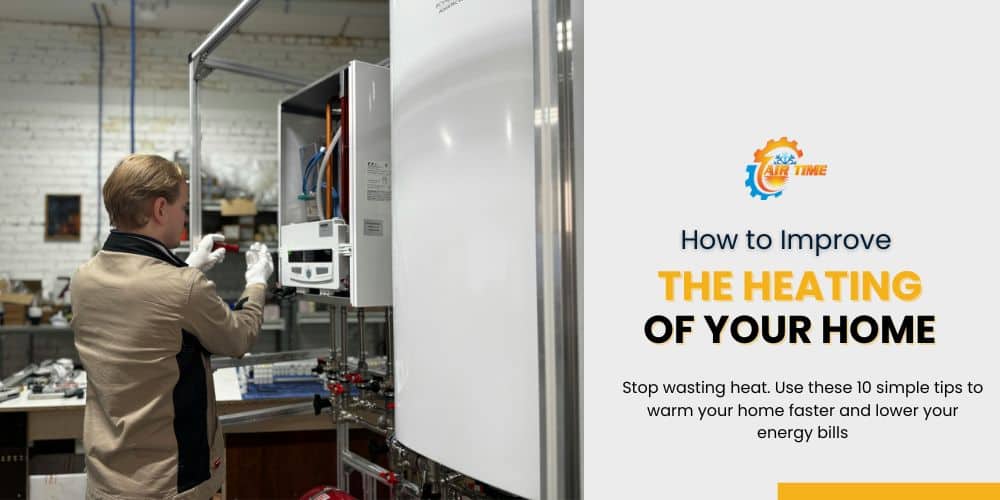
Your heating is on. Your energy bill is climbing. And yet, parts of your home still feel cold. You’re left wondering whether your heating system is inefficient, your house is the problem, or you’re just doing something wrong.
The truth is, most homes don’t lose heat because of one big issue. They lose it through lots of small, fixable inefficiencies that add up quickly. And the good news? You don’t need a brand-new heating system to make a real difference.
Below are 10 practical tips to help you improve the heating efficiency of your home, keep it warmer for longer, and reduce wasted energy — without overcomplicating things.
1. Set your thermostat properly

Turning the thermostat up higher doesn’t heat your home faster — it just makes your heating run longer.
Instead:
- Set a consistent, sensible temperature
- Avoid constantly turning it up and down
- Lower it slightly when you’re asleep or out
Even reducing your thermostat by 1°C can noticeably cut heating costs over a year, without making your home feel cold.
2. Use heating only where you need it

Heating unused rooms is one of the biggest efficiency killers in homes.
If possible:
- Turn radiators down in spare bedrooms or unused spaces
- Close doors to keep the heat where you actually live
- Focus warmth on living areas during the day and bedrooms at night
Heating the whole house “just in case” wastes energy you never feel.
3. Bleed your radiators regularly

If your radiators are hot at the bottom but cold at the top, trapped air is stopping them from working properly.
Bleeding your radiators:
- Helps heat circulate evenly
- Makes rooms warm up faster
- Reduces strain on your heating system
This is a five-minute job that many homeowners forget — and it can make a surprising difference.
4. Stop heat escaping through draughts
Draughts silently drain heat and force your heating to work harder.
Check for:
- Gaps around doors and windows
- Letterboxes and keyholes
- Floorboards and skirting boards
Simple draught-proofing strips or sealant are cheap, quick to install, and often pay for themselves within one winter.
5. Make sure insulation is doing its job

Insulation isn’t exciting, but it’s one of the most effective ways to improve heating efficiency.
Key areas to check:
- Loft insulation (this is a big one)
- Cavity or solid wall insulation
- Insulated hot water tanks and pipes]
Without proper insulation, you’re effectively paying to heat the outdoors.
6. Don’t block your radiators
It sounds obvious, but many radiators are partly blocked by furniture, curtains, or covers.
To improve heat flow:
- Keep the space in front of radiators clear
- Avoid long curtains covering them
- Be cautious with radiator covers — many reduce heat output
Radiators can’t heat a room efficiently if the heat can’t circulate.
7. Use heating controls more intelligently

If your home has timers, programmers, or thermostatic radiator valves, use them.
Smart control basics:
- Set heating schedules around your routine
- Avoid heating an empty house
- Use room-by-room controls where available
Better control doesn’t mean more complexity — it just means less wasted heat.
8. Check your boiler pressure and servicing

A boiler running at the wrong pressure or overdue for servicing won’t work efficiently.
You should:
- Check boiler pressure occasionally
- Book regular servicing
- Address small issues before they become expensive ones
A well-maintained boiler uses less energy to do the same job.
9. Retain heat once it’s in the room
Making heat is only half the job. Keeping it there matters just as much.
Simple habits help:
- Close curtains at night
- Use thicker curtains in colder rooms
- Close doors once rooms are warm
You’ll notice rooms staying comfortable for longer, even after the heating switches off.
10. Know when upgrades actually make sense
Not every home needs a full system replacement — but some upgrades are worth considering.
Examples:
- Replacing very old boilers
- Installing smart thermostats
- Upgrading insulation before upgrading heating
The key is order. Improve efficiency first, then consider upgrades. Otherwise, you risk paying for capacity you don’t need.
Ready to start fixing your heating efficiency?
If you’ve worked through these tips and your home still isn’t heating the way it should, it may be time to get a professional involved. Air Time LLC helps homeowners identify where heat is being lost, optimizes heating systems, and addresses efficiency issues before they become costly problems.
Whether it’s system performance, airflow, or heating control issues, getting expert eyes on your setup can save you money and a lot of frustration in the long run.