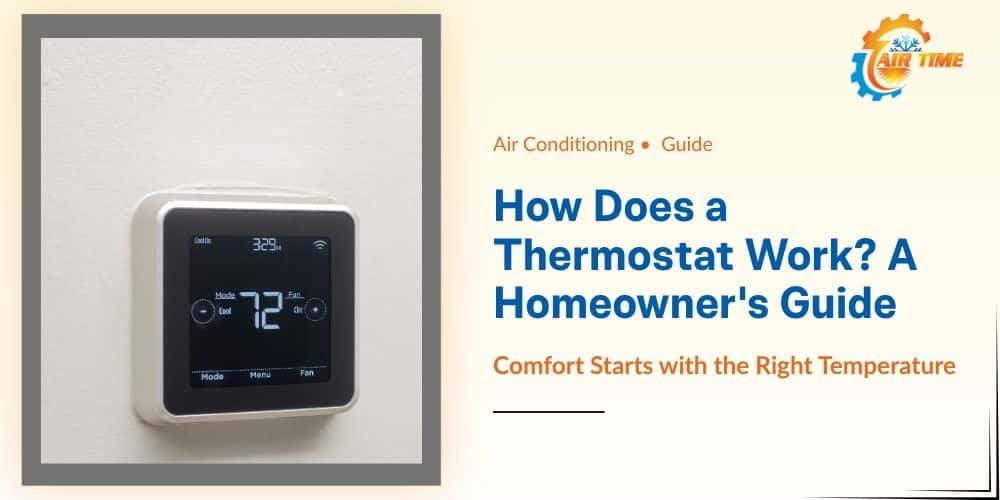
A thermostat works by continuously monitoring the indoor temperature with a built-in sensor. It compares the current room temperature to the temperature you’ve selected. If the room becomes warmer or cooler than your setting, the thermostat sends a signal to your HVAC system to start heating or cooling. Once the desired temperature is reached, it tells the system to stop, helping maintain consistent comfort while improving energy efficiency.
What Is a Thermostat?
A thermostat is a temperature control device that regulates your home’s heating and cooling system. Rather than producing heat or cold air itself, it tells your furnace, air conditioner, or heat pump when to turn on and off.
Think of your thermostat as the brain of your HVAC system. It constantly monitors the indoor temperature and ensures your heating and cooling equipment only operates when needed. This automatic control helps maintain a comfortable living environment while preventing unnecessary energy use.
Most residential thermostats are installed on an interior wall in a central area of the home. This location allows them to measure the average indoor temperature more accurately, ensuring consistent comfort throughout the house.
How Does a Thermostat Work? Step by Step
Although modern thermostats use advanced electronics, the basic operating principle remains straightforward. They continuously compare the room’s actual temperature with the temperature you’ve selected.
Here’s how the process works:
- The thermostat measures the room temperature.
A built-in sensor constantly detects the current indoor temperature. - It compares the temperature to your setting.
The thermostat checks whether the room is warmer or cooler than your desired temperature. - A signal is sent to the HVAC system.
If heating or cooling is needed, the thermostat sends an electrical signal to your furnace, heat pump, or air conditioner. - The HVAC equipment begins operating.
The system produces warm or cool air and distributes it throughout your home. - The thermostat continues monitoring.
As the indoor temperature changes, the thermostat keeps checking the readings. - The system turns off automatically.
Once the selected temperature is reached, the thermostat signals the HVAC system to stop running.
This process repeats throughout the day, allowing your home to stay at a relatively stable temperature without requiring constant manual adjustments. By cycling the HVAC system only when necessary, the thermostat also helps reduce unnecessary wear on heating and cooling equipment.
Main Components of a Thermostat
Every thermostat contains several key components that work together to control your HVAC system. While the exact design varies depending on the model, most modern thermostats include the following parts.
Temperature Sensor
The sensor is responsible for measuring the room’s temperature. Many digital thermostats use a thermistor, which changes electrical resistance as temperatures rise or fall. This allows the thermostat to detect even small temperature changes accurately.
Display and Controls
The display allows homeowners to view the current temperature, adjust settings, and switch between heating, cooling, or fan modes. Smart thermostats often include touchscreen controls for easier operation.
Internal Relay
The relay acts like a switch. When heating or cooling is required, it closes the electrical circuit and sends a signal to the HVAC equipment. Once the desired temperature is reached, it opens the circuit and turns the system off.
Power Source
Thermostats receive power from batteries, a common wire (C-wire), or both. Smart thermostats generally require continuous power because they support Wi-Fi connectivity and advanced features.
Circuit Board
The circuit board processes temperature readings, user settings, and communication with the HVAC system. It serves as the thermostat’s control center.
Wi-Fi Module (Smart Thermostats)
Smart thermostats include wireless connectivity, allowing homeowners to adjust temperatures remotely through mobile apps, receive maintenance reminders, and monitor energy usage.
Types of Thermostats
Not every thermostat offers the same features. Choosing the right one depends on your home’s HVAC system, lifestyle, and energy-saving goals.
Manual Thermostats
Manual thermostats are the simplest option. Homeowners adjust the temperature by turning a dial or pressing basic buttons whenever they want the home warmer or cooler.
Advantages include:
- Easy to operate
- Budget-friendly
- Reliable for basic HVAC systems
- Minimal maintenance
However, they require manual adjustments throughout the day, which may reduce energy efficiency if temperatures are frequently forgotten.
Programmable Thermostats
Programmable thermostats allow homeowners to create heating and cooling schedules based on daily routines. For example, the thermostat can automatically lower the temperature while you’re at work and warm the home before you return.
Common benefits include:
- Automatic daily scheduling
- Reduced energy consumption
- Improved indoor comfort
- Less need for manual adjustments
These thermostats are a practical choice for households with predictable schedules.
Smart Thermostats
Smart thermostats offer the most advanced features by combining temperature control with internet connectivity and intelligent automation.
Many models can:
- Learn your daily routine over time
- Be controlled using a smartphone app
- Work with voice assistants
- Provide energy usage reports
- Send maintenance reminders
- Adjust temperatures based on occupancy
For homeowners looking to maximize convenience and energy efficiency, smart thermostats provide greater flexibility than traditional models.
| Feature | Manual | Programmable | Smart |
| Temperature Control | Manual | Automatic Schedule | Intelligent Automation |
| Mobile App | No | Usually No | Yes |
| Energy Reports | No | No | Yes |
| Learning Features | No | No | Yes |
| Best For | Basic Systems | Regular Schedules | Maximum Comfort & Efficiency |
Why Thermostat Placement Matters
Even the most advanced thermostat can give inaccurate readings if it is installed in the wrong location. Since a thermostat responds to the temperature immediately around it, poor placement can cause your HVAC system to run more or less often than necessary. This may lead to uneven temperatures, reduced comfort, and higher energy bills.
For the most accurate performance, thermostats should be installed on an interior wall in a central part of the home where they can measure the average indoor temperature.
Avoid placing your thermostat near:
- Direct sunlight: Sunlight can warm the thermostat, making it think the room is hotter than it actually is.
- Air vents: Warm or cool air blowing directly onto the thermostat can cause false readings.
- Windows and exterior doors: Drafts and outdoor temperatures can affect the sensor’s accuracy.
- Kitchens: Heat from ovens, stovetops, and other appliances can interfere with temperature readings.
- Fireplaces: Nearby heat sources may cause the thermostat to shut off your heating system too soon.
- Bathrooms: Steam and fluctuating temperatures can lead to inaccurate operation.
A properly placed thermostat helps your HVAC system maintain a consistent indoor climate while reducing unnecessary heating and cooling cycles.
Common Thermostat Problems and Simple Troubleshooting Tips
If your heating or cooling system isn’t working properly, the thermostat is often one of the first components to check. Fortunately, many thermostat issues have simple explanations that homeowners can safely troubleshoot before calling a professional.
Here are some of the most common problems and their possible solutions.
Blank Display
A thermostat with a blank screen may not be receiving power.
Possible causes:
- Dead batteries
- Tripped circuit breaker
- Loose wiring
- Power interruption
Try this:
- Replace the batteries if your thermostat uses them.
- Check the home’s electrical panel for a tripped breaker.
- Ensure the thermostat display is securely attached to its base.
If the display remains blank after these steps, professional diagnosis may be necessary.
Incorrect Temperature Readings
If your home feels warmer or cooler than the thermostat indicates, the sensor may not be reading the temperature accurately.
Possible causes:
- Poor thermostat placement
- Dust buildup inside the unit
- Aging temperature sensor
Try this:
- Clean the thermostat gently with a soft brush.
- Compare the reading with a reliable room thermometer.
- Check for nearby heat sources or drafts.
HVAC System Won’t Turn On
Sometimes the thermostat appears to work, but the heating or cooling equipment never starts.
Possible causes:
- Incorrect operating mode
- Temperature setting is too close to the current room temperature
- Wiring issues
- HVAC equipment malfunction
Try this:
- Verify that the thermostat is set to Heat or Cool, depending on the season.
- Adjust the temperature several degrees above or below the current room temperature to trigger the system.
- Replace batteries if needed.
Frequent On-and-Off Cycling
If your HVAC system starts and stops repeatedly within a short period, the thermostat may be causing short cycling.
Possible causes:
- Poor thermostat location
- Dirty HVAC filter
- Incorrect thermostat calibration
- Oversized HVAC equipment
Frequent cycling reduces efficiency and increases wear on heating and cooling equipment, so persistent issues should be inspected by an HVAC professional.
Wi-Fi Connection Problems
Smart thermostats rely on a stable internet connection for remote access and advanced features.
If your thermostat disconnects from Wi-Fi:
- Restart your router.
- Reconnect the thermostat through the mobile app.
- Check for available firmware updates.
- Confirm that your home’s Wi-Fi signal reaches the thermostat.
Can a Thermostat Help Save Energy?
A thermostat does much more than maintain a comfortable temperature—it can also improve your home’s energy efficiency when used correctly. While the exact savings depend on your home’s insulation, HVAC system, and daily habits, thoughtful thermostat settings can reduce unnecessary heating and cooling.
Here are several ways a thermostat helps conserve energy:
- Maintains consistent temperatures instead of constantly making large adjustments.
- Reduces unnecessary HVAC operation by turning equipment off once the desired temperature is reached.
- Uses programmable schedules to automatically adjust temperatures while you’re sleeping or away from home.
- Supports vacation settings that prevent energy waste during extended trips.
- Smart thermostats learn household routines and automatically optimize heating and cooling schedules.
- Reduces wear on HVAC equipment, which may help extend the lifespan of your heating and cooling system.
It’s also important to remember that a thermostat works best as part of a well-maintained HVAC system. Replacing air filters regularly, scheduling professional maintenance, and sealing air leaks throughout your home all contribute to better comfort and improved efficiency.
FAQ-
How does a thermostat know the room temperature?
A thermostat uses a built-in temperature sensor, often called a thermistor, to measure the air temperature around it. The sensor continuously sends updated readings to the thermostat, allowing it to determine when heating or cooling is needed.
Does turning the thermostat lower cool the house faster?
No. Lowering the thermostat far below your desired temperature does not make your air conditioner cool the home faster. It simply causes the system to run longer until the selected temperature is reached.
How long does a thermostat typically last?
Most thermostats last about 10 to 15 years, depending on the model, usage, and maintenance. If your thermostat becomes inaccurate, unresponsive, or lacks modern energy-saving features, replacing it may improve comfort and system performance.
Can a faulty thermostat increase energy bills?
Yes. An inaccurate or malfunctioning thermostat may cause your HVAC system to run longer than necessary or cycle too frequently. This can increase energy consumption and place additional strain on heating and cooling equipment.
How does a thermostat control the temperature?
A thermostat controls the temperature by comparing your home’s current indoor temperature with your selected setting. When the temperature rises above or falls below the set point, it signals your HVAC system to turn on or off, helping maintain consistent indoor comfort.
How does a thermostat know when to turn on?
When sensors detect that the room is too hot or too cold compared to your set point, the thermostat signals your heating or cooling unit to turn on or off until the desired temperature is reached.
When should I replace my thermostat?
Consider replacing your thermostat if it:
- Frequently displays incorrect temperatures
- Doesn’t respond to setting changes
- Causes inconsistent heating or cooling
- Requires frequent repairs
- Is over 10–15 years old
- Isn’t compatible with newer HVAC technology
Conclusion
A thermostat is the control center of your HVAC system, helping maintain a comfortable indoor temperature by signaling your heating and cooling equipment when to run. Understanding how it works can help you improve energy efficiency, troubleshoot common issues, and choose the right thermostat for your home.
Regular maintenance and proper thermostat settings also support reliable HVAC performance throughout the year. If you need expert guidance with thermostat installation, replacement, or HVAC services, the experienced team at Air Time LLC is ready to help keep your home comfortable in every season.