When your air conditioner is not turning on, it can be difficult to know whether the problem is something simple or a sign of a larger HVAC failure. A thermostat setting, tripped breaker, clogged condensate drain, failed capacitor, faulty contactor, or electrical problem can all prevent an AC system from starting.
Before assuming you need a major repair, start by identifying exactly what your system is doing. Some basic checks are safe for homeowners, while electrical and mechanical problems require professional diagnosis.
Why Is My AC Not Turning On?
If your AC unit won’t turn on, check these common causes first:
- Thermostat is set incorrectly
- Thermostat batteries are dead
- Circuit breaker has tripped
- Indoor HVAC power switch is off
- Condensate drain or safety switch has shut down the system
- Air filter is severely clogged
- Outdoor unit has an electrical problem
- Capacitor or contactor has failed
- Wiring, control board, or compressor has a problem
Start with the thermostat and power supply. Never open electrical panels or attempt to work on capacitors, compressors, or refrigerant components yourself.
1. Check Your Thermostat
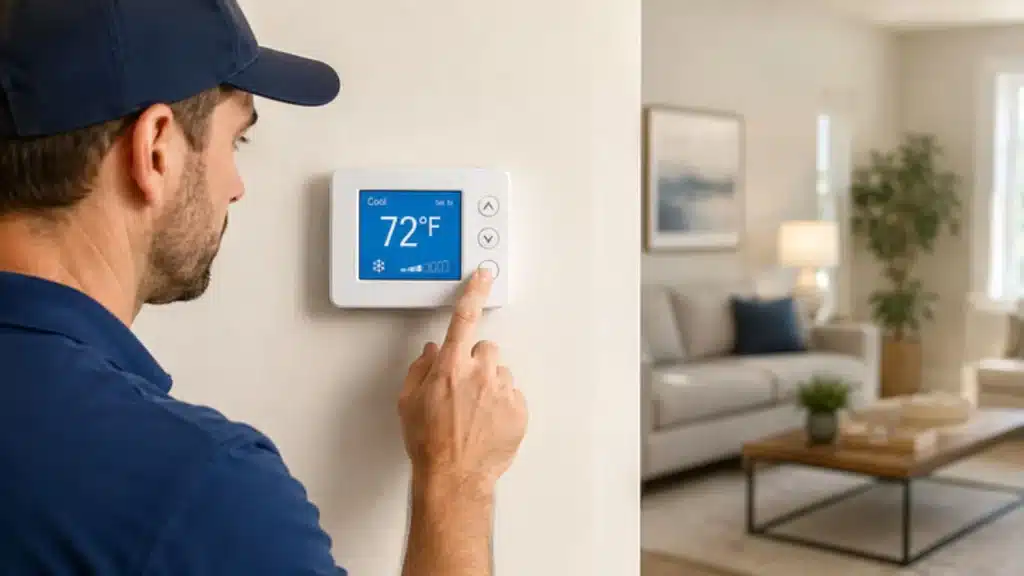
The thermostat is the easiest place to start when your air conditioner won’t turn on.
Make sure it is set to cool rather than heat or off. Lower the temperature several degrees below the current room temperature and wait a few minutes.
Also check whether the thermostat display is working. A blank screen may indicate dead batteries, loss of power, a blown low-voltage fuse, or another electrical problem.
Try these steps:
- Set the thermostat to Cool.
- Lower the temperature 3–5 degrees.
- Replace the batteries if necessary.
- Make sure the display is functioning.
- Wait several minutes for the AC to respond.
Some systems intentionally delay compressor startup for a few minutes, so don’t repeatedly switch the system on and off.
2. Look for a Tripped Circuit Breaker
If your AC will not turn on, check your electrical panel for a breaker labelled AC, Air Conditioner, or Condenser.
A breaker may trip when the system experiences an electrical problem or abnormal load. If the breaker is clearly in the middle or OFF position, you can reset it once by switching it fully OFF and then back ON.
If it immediately trips again, don’t keep resetting it. Repeated trips can indicate an electrical fault, short circuit, compressor problem, or another issue that needs professional attention.
Never remove electrical panels or attempt electrical repairs unless you are properly qualified.
3. Make Sure the Indoor Unit Has Power
If the inside AC unit won’t turn on, check the power switch located near your indoor air handler or furnace.
This switch can look like an ordinary light switch and may accidentally be turned off during cleaning, storage, or maintenance.
If the indoor unit has no power, your blower may not operate and the AC may not respond even when the thermostat appears normal.
If you’re unsure which switch controls your HVAC equipment, avoid flipping unknown switches and have a technician inspect it.
4. Check for a Clogged Condensate Drain
A condensate problem is another possible reason your inside AC unit won’t turn on.
Air conditioning systems naturally produce condensation while removing humidity from your home’s air. That water normally flows through a condensate drain. When the drain becomes clogged, water can collect in the drain pan.
Many systems have a float safety switch that shuts the AC down when the water level becomes too high. This helps prevent water damage to ceilings, walls, and other parts of your home.
Look for:
- Water around the indoor unit
- A full or overflowing drain pan
- A sudden AC shutdown
- An AC that won’t start despite a working thermostat
If you see significant standing water, professional service is the safest option.
5. Replace a Severely Dirty Air Filter
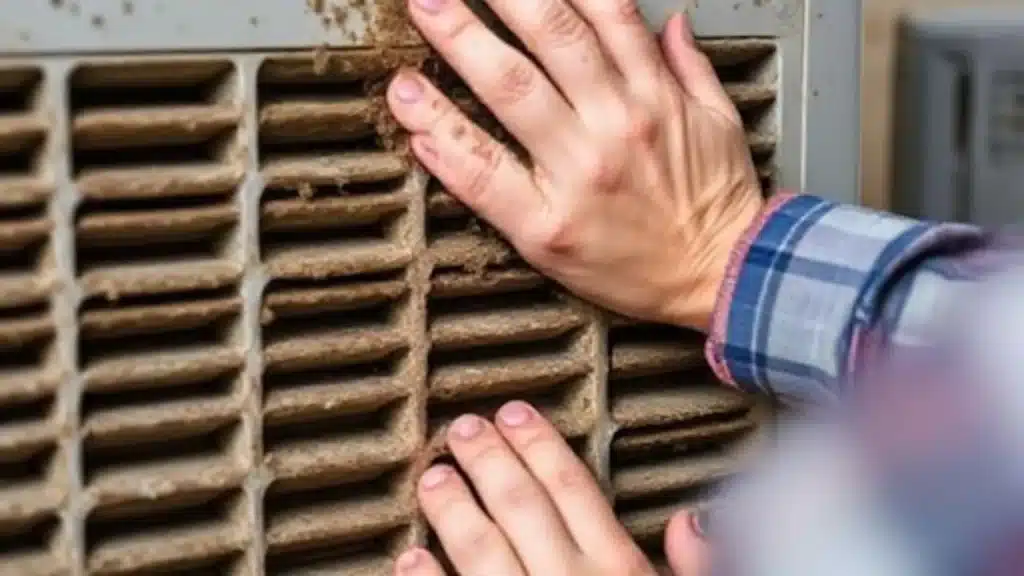
A severely clogged filter can restrict airflow and contribute to frozen coils, overheating, and system shutdowns. San Antonio AC systems often run for long periods during summer, which can cause filters to become dirty quickly.
Check your filter if it hasn’t been replaced recently. If it is visibly covered with dust, replace it with the correct size and type.
However, a dirty filter isn’t necessarily the reason your AC unit will not turn on. If replacing the filter doesn’t restore operation, another problem may be present.
6. What If the Outside AC Unit Isn’t Turning On?
A common situation is that the indoor blower works, but the outdoor condenser remains completely silent.
If your outside AC unit is not turning on, possible causes include:
- Tripped breaker
- Outdoor disconnect problem
- Failed capacitor
- Faulty contactor
- Damaged wiring
- Condenser fan motor failure
- Compressor problem
- Thermostat or control issue
The outdoor unit is responsible for releasing the heat removed from your home. If it doesn’t operate, your system cannot provide normal cooling even if air is still coming from the vents.
Do not remove the outdoor unit’s electrical panel to investigate. High-voltage components can be dangerous even when the system appears to be off.
7. A Failed Capacitor Can Prevent Startup
The capacitor provides an electrical boost that helps certain AC motors start and operate.
When a capacitor fails, you might hear:
- Humming from the outdoor unit
- Clicking without startup
- Repeated startup attempts
- A fan that won’t spin
- Complete failure to start
A bad capacitor is a common HVAC repair, but it is not a safe DIY repair. Capacitors can store an electrical charge even after the system is turned off.
If your AC hums but won’t start, turn it off and have a qualified HVAC technician diagnose the problem.
8. A Faulty Contactor May Keep the Outdoor Unit Off
The contactor is an electrical switching component that controls power to important outdoor components.
When it fails, the thermostat may appear to work normally while the outdoor unit doesn’t start.
Possible signs include:
- A completely silent condenser
- Clicking sounds
- Intermittent operation
- Burned electrical components
- Outdoor fan or compressor failing to start
Because diagnosing and replacing a contactor involves electrical components, this repair should be handled by a trained professional.
9. Compressor or Wiring Problems
If your AC unit will not turn on after checking the thermostat and power supply, the problem could involve the compressor, control board, wiring, or another internal component.
The compressor is one of the most important components in a central AC system. Electrical failure, overheating, mechanical wear, or other system problems can prevent it from starting.
A damaged wire, loose connection, blown low-voltage fuse, or failed control component can also stop the system from responding to the thermostat.
These issues require proper testing rather than guesswork. A professional can identify the failed component and determine whether repair or replacement is the better option.
What If the AC Turns On but Doesn’t Cool?
Sometimes homeowners say their air conditioner is not turning on when the system is actually running but not producing cold air.
If air is coming from the vents but your home isn’t cooling, possible causes include:
- Refrigerant problems
- Dirty evaporator or condenser coils
- Restricted airflow
- Outdoor unit failure
- Compressor problems
- Thermostat issues
- Ductwork problems
Don’t continue running a struggling system for hours hoping it will fix itself. A minor problem can sometimes develop into a more expensive repair when ignored.
What Should You Not Do When Your AC Won’t Start?
When an AC stops working, avoid taking electrical or refrigerant components apart yourself.
Do not:
- Open electrical panels
- Touch or replace capacitors
- Bypass safety switches
- Force the outdoor contactor
- Work on refrigerant lines
- Repeatedly reset a tripping breaker
- Jump thermostat wires without proper training
- Continue running a system that smells burned
Basic checks such as thermostat settings, the air filter, and visible signs of water are reasonable for homeowners. Electrical and refrigerant repairs should be left to qualified professionals.
When Should You Call an AC Repair Professional in San Antonio?
You should schedule professional AC repair in San Antonio when basic troubleshooting doesn’t get your system running or you notice signs of a more serious problem.
Call an HVAC professional if:
- Your AC breaker repeatedly trips.
- The outdoor unit is completely silent.
- The system hums but won’t start.
- You smell burning or overheated wiring.
- Water is collecting around the indoor unit.
- The AC repeatedly starts and stops.
- The thermostat is blank despite having power.
- Your system suddenly stops during extreme heat.
San Antonio’s summer temperatures can make a failed AC more than an inconvenience. Prompt diagnosis can restore comfort and help prevent additional damage.
How Air Time LLC Can Help
When your AC will not turn on, you don’t need to guess whether the problem is the thermostat, capacitor, contactor, compressor, or another component.
Air Time LLC provides professional air conditioning services in San Antonio backed by 20+ years of HVAC experience. Our technicians can diagnose the problem, explain your repair options, and help get your cooling system operating reliably again.
Whether your inside AC unit won’t turn on, your outdoor condenser isn’t starting, or your system is running without cooling, professional troubleshooting can identify the actual cause.
If your air conditioner has stopped working, contact Air Time LLC for dependable AC repair in San Antonio.
How to Prevent an Unexpected AC Breakdown
You can’t prevent every AC failure, but regular AC maintenance can reduce the risk of sudden problems.
- Replace your air filter as recommended.
- Keep debris away from the outdoor condenser.
- Pay attention to unusual noises or odors.
- Don’t ignore water around the indoor unit.
- Address weak cooling before the system stops.
- Schedule regular professional AC maintenance.
Routine maintenance can help identify airflow restrictions, drainage issues, worn electrical components, and other developing problems before they become major failures.
Frequently Asked Questions
Why is my air conditioner not turning on?
A thermostat problem, tripped breaker, power issue, condensate safety switch, clogged filter, failed capacitor, faulty contactor, wiring problem, or compressor issue can prevent an AC from starting.
Why won’t my AC turn on but the thermostat is working?
A working thermostat doesn’t guarantee that the rest of the system has power. The problem could involve the breaker, disconnect, condensate switch, wiring, capacitor, contactor, or another component.
Why is my inside AC unit not turning on?
Check the thermostat, HVAC power switch, breaker, and signs of a condensate problem. If these appear normal, professional diagnosis may be necessary.
Why is my outside AC unit not turning on?
Possible causes include a power problem, failed capacitor or contactor, wiring issue, condenser fan problem, or compressor failure.
Should I reset my AC breaker?
You can reset a tripped breaker once. If it trips again, don’t repeatedly reset it. A recurring trip indicates that the system should be professionally inspected.
Can a dirty filter stop an AC from working?
A severely dirty filter can restrict airflow and contribute to system shutdowns, but it isn’t the only possible cause of an AC that won’t start.
Is it safe to replace an AC capacitor myself?
No. Capacitors can retain a dangerous electrical charge. Testing and replacement should be performed by a qualified HVAC professional.
How long should I wait after turning my AC on?
Some systems have a built-in compressor delay, so the outdoor unit may take several minutes to start. If it remains off, continue with basic troubleshooting or contact an HVAC professional.
Should I repair or replace my AC?
That depends on the system’s age, condition, repair history, efficiency, and failed components. A professional diagnosis can help you compare repair and replacement options.
Final Takeaway
When your air conditioner is not turning on, start with the simple checks: thermostat settings, batteries, circuit breaker, indoor power switch, filter, and visible condensate problems.
If your AC still won’t start, or you hear humming, clicking, repeated breaker trips, or unusual electrical smells, stop troubleshooting and call a professional.
For San Antonio homeowners, getting an AC problem diagnosed quickly is especially important during extreme Texas heat. Air Time LLC’s 20+ years of HVAC experience can help identify the problem and get your cooling system back to dependable operation.